83%
of hires fail due to rushed or passive recruiting.
Top rated specialist

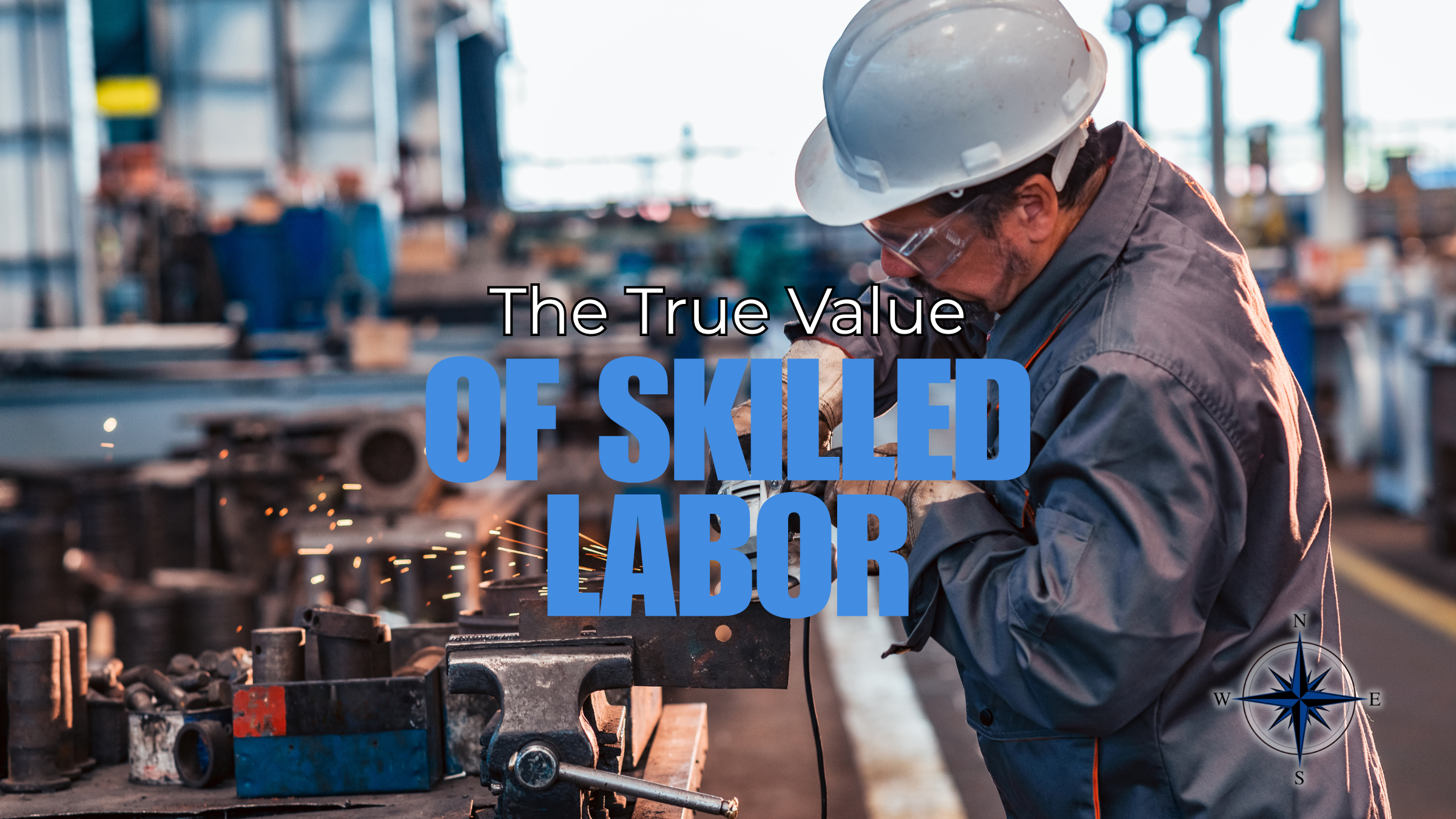
In the industrial world, every dollar matters.
Project budgets are tight. Deadlines are demanding. Competition is fierce. And whether you're managing a major construction project, preparing for a plant turnaround, or maintaining daily operations, controlling costs is always part of the conversation.
But there's one question every industrial employer should consider:
Are you saving money, or are you simply spending less?
Those two things aren't always the same.
When it comes to skilled labor, the lowest hourly rate doesn't necessarily produce the lowest overall project cost.
An experienced worker may come with a higher price tag, but that same worker may complete tasks more efficiently, produce higher-quality work, identify potential problems earlier, and help prevent costly delays.
At Southern Response Services, we understand that industrial staffing is about more than putting people on a jobsite.
It's about helping companies find the right people to get the job done correctly, safely, and efficiently.
And sometimes, the real value of a worker can't be measured by an hourly rate alone.
Every business has to manage expenses.
Labor is often one of the largest expenses associated with an industrial project, so it's understandable that companies look closely at pay rates and staffing costs.
But cost and value are two different things.
Cost is what you pay.
Value is what you receive in return.
Consider two workers performing the same task.
One has limited experience and requires frequent supervision, additional instruction, and occasional rework.
The other has years of experience, understands the process, works efficiently, and consistently delivers quality results.
Even if the second worker earns more per hour, the overall cost of completing the work could be lower.
Why?
Because productivity, accuracy, and efficiency all affect the bottom line.
The goal shouldn't simply be finding the least expensive worker.
The goal should be finding the right worker for the job.
There's something valuable about a worker who has already encountered the challenges your project may face.
An experienced pipefitter understands how to recognize potential fit-up problems.
A seasoned millwright may identify an alignment issue before equipment returns to operation.
A qualified electrician understands the importance of troubleshooting systematically instead of guessing.
An experienced equipment operator knows how to approach difficult conditions while protecting equipment and the people working nearby.
These abilities develop through training, repetition, and time in the field.
Experience doesn't eliminate every mistake, but it can help workers recognize potential issues before they become larger problems.
And in industrial environments, catching a problem early can make a tremendous difference.
Imagine completing a task only to discover that it wasn't done correctly.
Now the work has to stop.
Someone has to identify the issue.
Materials may need to be replaced.
Additional labor hours may be required.
Other crews may be forced to wait.
Inspections may need to be repeated.
The schedule may be affected.
Suddenly, the money saved by choosing a less qualified worker has disappeared.
Rework is one of those expenses that can be easy to underestimate when making initial staffing decisions.
Quality workmanship matters because completing the task correctly the first time helps protect the project's schedule and resources.
That's why experienced, qualified workers can be such an important investment.
When people hear the word productivity, they often think about speed.
But true productivity isn't simply how quickly someone can complete a task.
It's how effectively they complete it.
A productive worker understands the assignment, uses the correct methods, follows procedures, communicates with the crew, and produces quality work without unnecessary delays.
They know when to move quickly.
They also know when to slow down and make sure something is right.
In industrial work, rushing through a task can create more problems than it solves.
The best workers understand how to balance efficiency with safety and quality.
Getting the job done fast means very little if it has to be done twice.
Safety should never be treated as just another line item in a project budget.
Protecting employees is a responsibility that goes far beyond dollars and cents.
But safety also has a significant operational impact.
An incident can result in injuries, work stoppages, investigations, equipment damage, schedule disruptions, and additional costs.
Proper training, experience, and a commitment to following established safety procedures help reduce risk.
Qualified workers understand that shortcuts can have consequences.
They recognize hazards.
They follow procedures.
They communicate concerns.
They know that getting the job done safely is part of getting the job done correctly.
When employers prioritize qualified people who take safety seriously, they're investing in both their workforce and their operation.
Every job requires leadership and oversight.
But there's a difference between managing a crew and having to constantly monitor every individual task.
Experienced workers often require less instruction for responsibilities they're already qualified to perform.
They understand expectations.
They recognize the next steps.
They know when to ask questions.
They communicate problems before they grow.
That allows supervisors to spend more time coordinating the overall project instead of repeatedly addressing avoidable issues.
This doesn't mean experienced workers should operate without supervision or accountability.
It means that having capable people on the crew can help leadership focus on the bigger picture.
And that benefits everyone.
Not every welder has the same experience.
Not every electrician has worked in the same environment.
Not every equipment operator is familiar with every machine.
And not every millwright has the same background in precision alignment or rotating equipment.
That's why matching qualifications to the actual work is so important.
A job title alone doesn't tell the whole story.
Employers need to consider the specific skills, certifications, experience, and working conditions associated with a position.
A highly experienced worker in one environment may still need training or additional qualifications for another.
The strongest staffing decisions begin with understanding what the job truly requires.
At Southern Response Services, that's an important part of what we do.
We work to understand our clients' needs so we can connect them with candidates whose qualifications align with the work.
In industrial construction, maintenance, outages, and turnarounds, schedules matter.
When one part of a project falls behind, the effects can reach other crews, contractors, and operations.
A task that takes longer than expected may delay the next phase.
That delay may create additional labor costs.
Equipment rentals may need to be extended.
Supervisors may need to adjust manpower.
Customers may be waiting on the finished work.
Sometimes the difference between a successful project and an expensive one comes down to having the right people available when they're needed.
That's why labor should be evaluated as part of the overall project strategy, not simply as an expense to minimize.
None of this means employers should automatically choose the highest-paid worker or the most expensive staffing option.
Higher cost doesn't guarantee better performance.
And every project has financial realities that must be respected.
The key is finding the right balance.
Some tasks may be appropriate for developing workers who can learn under qualified supervision.
Other responsibilities may require highly experienced specialists.
Some projects need a combination of both.
The goal is to build a workforce that matches the project's technical requirements, safety expectations, schedule, and budget.
Smart staffing isn't about spending the most.
It's about making the most of what you spend.
Before deciding what labor should cost, employers should understand what the work actually requires.
What skills are essential?
What certifications are necessary?
How complex is the work?
How much experience is needed?
What is the project schedule?
Are there specialized tools or equipment involved?
What are the safety requirements?
How much supervision will be available?
These questions help determine the type of workforce needed to complete the project successfully.
And when those expectations are communicated clearly, staffing partners are better positioned to identify qualified candidates.
The more accurately a company defines its needs, the better its chances of finding the right people.
Industrial staffing isn't just about filling vacancies.
It's about understanding the challenges employers face and helping them find people capable of meeting those challenges.
A reliable staffing partner should understand that every project is different.
A short-term industrial outage may require a large number of experienced tradespeople on a tight schedule.
A long-term construction project may require workers with specialized certifications.
A manufacturing facility may need dependable employees who can support ongoing operations.
Each situation requires a different approach.
At Southern Response Services, our goal is to understand those needs and connect employers with qualified professionals who can contribute to the success of their operations.
We recognize that our clients are making an investment every time they bring someone onto a project.
And we take that responsibility seriously.
There's no question that labor costs matter.
But when evaluating skilled workers, the conversation should go beyond what appears on a rate sheet.
Consider the experience.
Consider the qualifications.
Consider the quality of work.
Consider the productivity.
Consider the safety expectations.
Consider the potential impact on the project schedule.
Most importantly, consider the overall value that worker brings to the operation.
Because sometimes the worker who costs more per hour is the worker who helps you save money by the time the job is finished.
And sometimes the cheapest option becomes the most expensive decision.
At Southern Response Services, we believe the right people make a difference.
They make a difference in the quality of work.
They make a difference in productivity.
They make a difference in safety.
They make a difference in how projects move forward.
And ultimately, they make a difference in the success of the companies they work for.
We're proud to serve industrial, technical, and environmental employers by connecting them with the skilled workforce they need.
Because successful projects aren't built on hourly rates alone.
They're built on experience, preparation, quality, teamwork, and the people doing the work.
The next time you're evaluating labor costs, don't just ask what a worker will cost.
Ask what the right worker could be worth.
Southern Response Services
Connecting skilled people with the companies that keep America moving.