83%
of hires fail due to rushed or passive recruiting.
Top rated specialist

If you've spent any amount of time working in the industrial world, you already know one thing.
Things don't always go according to plan.
A project schedule changes.
Equipment breaks down.
Materials arrive late.
Weather creates unexpected challenges.
A crew gets reassigned.
A job that was supposed to take two days suddenly takes four.
And sometimes, the entire plan changes before the first shift even begins.
That's the reality of industrial work.
No matter how much preparation goes into a project, unexpected situations are part of the job.
But what separates a good workforce from a great one isn't necessarily the ability to avoid every challenge.
It's the ability to respond when those challenges happen.
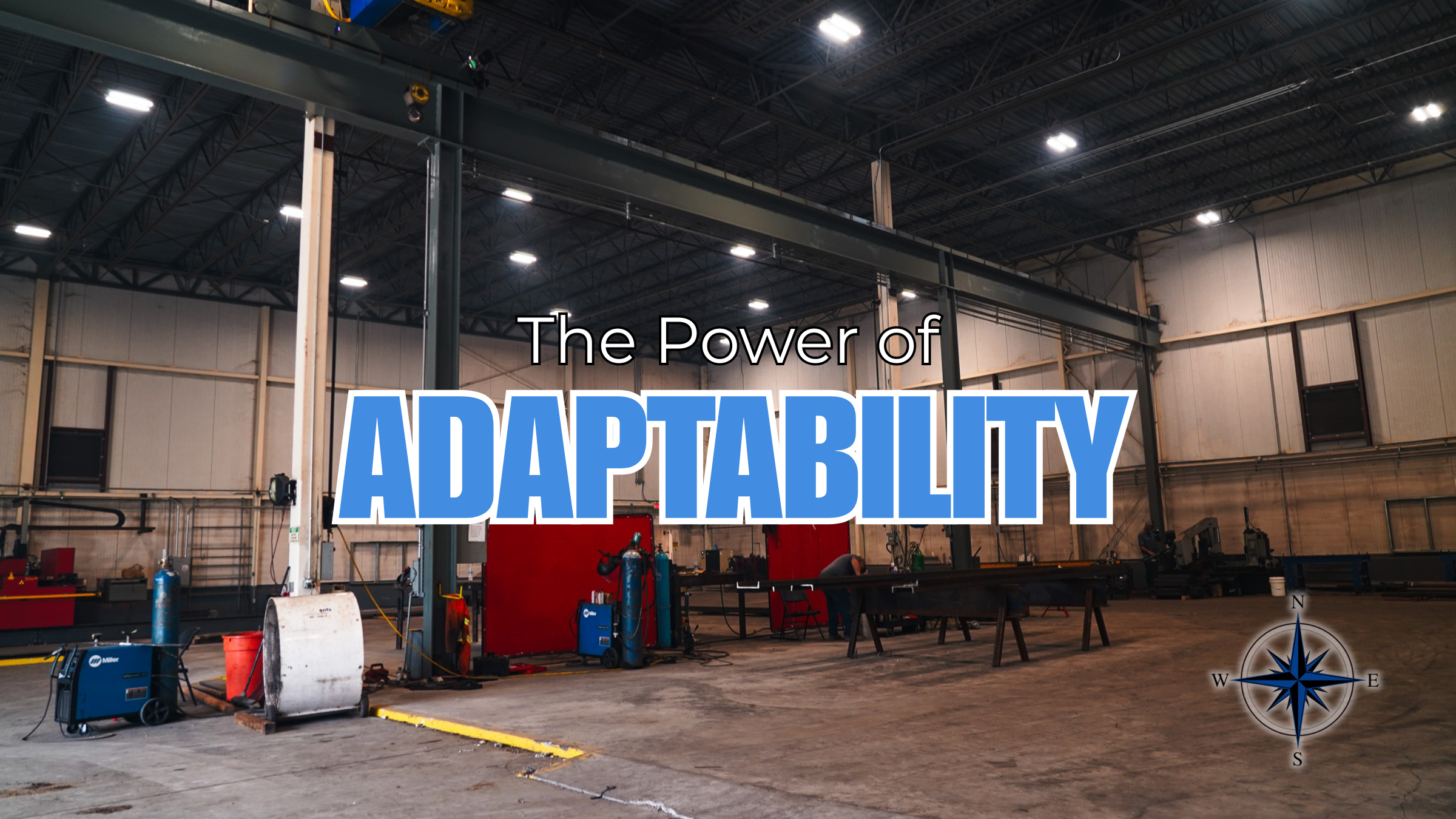
At Southern Response Services, we work with skilled professionals and industrial employers who understand that success requires more than technical ability.
It requires communication, problem-solving, teamwork, and perhaps one of the most underrated qualities in the workforce today:
Adaptability.
Industrial work has never been a one-size-fits-all environment.
Every project is different.
Every facility operates differently.
Every contractor has different expectations.
Every jobsite presents its own challenges.
And as technology, equipment, processes, and workforce demands continue to evolve, the ability to adjust becomes increasingly important.
Think about how much industrial work has changed over the years.
Equipment has become more advanced.
Digital technology has become a larger part of daily operations.
Safety procedures have evolved.
Manufacturing processes have improved.
Communication has become faster.
And employers are constantly looking for ways to operate more efficiently.
Workers who are willing to learn and adapt are better positioned to navigate those changes.
Because in this industry, what worked 20 years ago may not always be the best approach today.
There's no substitute for experience.
A worker who has spent years mastering a trade brings valuable knowledge to a jobsite.
They've encountered problems.
They've learned from mistakes.
They've developed techniques.
They understand the challenges that come with their work.
But experience can become a limitation when someone refuses to consider a different approach.
We've all heard some version of the phrase:
"That's how we've always done it."
Sometimes, the traditional way is still the right way.
Other times, a new process, updated procedure, or improved piece of equipment may offer a better solution.
The strongest workers understand the difference.
They respect the knowledge they've gained while remaining willing to learn something new.
Being adaptable doesn't mean abandoning experience.
It means using experience as a foundation for continued growth.
Imagine showing up to a jobsite expecting to complete a specific task.
You've reviewed the assignment.
You've gathered the necessary tools.
Your crew is ready.
Then something changes.
The materials aren't available.
Another contractor hasn't completed their portion of the project.
Equipment is unavailable.
Or the supervisor receives new instructions that require the crew to adjust its priorities.
Now what?
Some workers become frustrated and spend the rest of the shift complaining about the change.
Others immediately begin asking questions.
What needs to happen next?
What can we accomplish in the meantime?
Is there another task we can safely complete?
Who needs to be informed?
What resources do we need?
That difference in mindset can have a major impact on productivity.
Adaptable workers don't ignore problems.
They look for appropriate solutions.
There's an important distinction between adapting to a situation and ignoring established procedures.
Industrial environments involve serious hazards, technical requirements, and strict safety expectations.
Workers should never interpret flexibility as permission to bypass safety requirements, perform work outside their qualifications, or disregard approved procedures.
True adaptability means finding a safe, appropriate, and effective way to respond to changing circumstances.
Sometimes that requires stopping work.
Sometimes it requires additional training.
Sometimes it means getting clarification from a supervisor.
And sometimes it means recognizing that the original plan is no longer appropriate.
Being adaptable isn't about doing whatever it takes to finish.
It's about understanding what needs to change while maintaining the standards that protect people and the quality of the work.
In the skilled trades, technical ability and problem-solving often go hand in hand.
A mechanic may encounter an issue that wasn't identified during the initial inspection.
An electrician may discover that the problem isn't where everyone originally expected.
A pipefitter may need to address an unexpected fit-up challenge.
An equipment operator may encounter changing ground conditions.
A supervisor may have to reorganize a crew because of a scheduling conflict.
These situations require more than simply following a routine.
They require workers to evaluate the situation, communicate with the appropriate people, and determine the next steps.
The best problem-solvers don't automatically assume they know the answer.
They gather information.
They consider their options.
They ask questions.
They use their experience.
And they involve the appropriate personnel when necessary.
That approach can help prevent small problems from becoming larger ones.
When plans change, communication becomes even more important.
A change that seems minor to one person may have a major impact on another crew.
For example, a delayed delivery may affect the installation schedule.
That delay may change when equipment is needed.
It may also affect inspections, manpower, and the next phase of the project.
If the right people aren't informed, confusion can spread quickly.
That's why strong industrial teams communicate changes clearly and promptly.
Workers need to understand updated expectations.
Supervisors need accurate information from the field.
Project managers need to understand how changes may affect the schedule.
And contractors need to coordinate with one another.
Adaptability isn't just an individual skill.
It's something entire teams must practice together.
Industrial work can be demanding.
There are deadlines to meet.
Customers to satisfy.
Equipment to maintain.
Production targets to achieve.
And people depending on the work being completed correctly.
When unexpected problems arise, pressure can increase quickly.
That's when attitude matters.
A worker who becomes overwhelmed by every change can make a difficult situation even harder.
But someone who remains calm, focused, and professional can help the entire crew respond more effectively.
That doesn't mean ignoring frustration.
It means recognizing that frustration alone won't solve the problem.
The most valuable workers often have the ability to acknowledge a challenge without allowing it to control their response.
They stay focused on what can be done next.
Technology continues to influence the industrial workforce.
Modern equipment often includes advanced controls, digital monitoring systems, automation, and electronic diagnostic tools.
Many facilities rely on software to track maintenance, production, and equipment performance.
Construction projects increasingly use digital drawings, project management platforms, and other tools to improve coordination.
For workers who have spent decades in the industry, some of these changes may require learning unfamiliar systems.
For younger workers, new technology may feel more natural, but practical field experience remains essential.
The strongest teams benefit when both generations are willing to learn from one another.
Experienced workers contribute years of hands-on knowledge.
Newer workers may bring familiarity with emerging tools and technologies.
Together, they can help create a workforce that respects proven methods while embracing useful improvements.
Workers who can successfully adjust to different environments often develop broader career opportunities.
Consider a skilled tradesperson who has experience working in multiple facilities, with different contractors, and on a variety of projects.
That worker may have encountered different equipment, procedures, schedules, and operating conditions.
Each experience can strengthen their understanding of the trade.
Over time, they may become more comfortable stepping into unfamiliar situations.
They may develop stronger communication skills.
They may learn how to work with different crews.
They may gain experience with specialized equipment.
And they may become more confident solving problems.
Employers value workers who can contribute effectively while learning the specific requirements of a new assignment.
Being adaptable doesn't mean claiming to know how to do everything.
It means being willing and able to learn what the job requires.
Adaptability isn't only a responsibility for employees.
Industrial employers and contractors must also be prepared to respond when circumstances change.
Project timelines shift.
Customer demands evolve.
Workforce availability changes.
Material costs fluctuate.
Equipment requires unexpected maintenance.
And new opportunities sometimes require companies to increase manpower quickly.
Organizations that can respond effectively are often better positioned to manage these challenges.
That may involve adjusting schedules.
Reevaluating priorities.
Providing additional training.
Improving communication.
Or working with staffing partners to address changing workforce needs.
The goal isn't to constantly change direction without a plan.
It's to build an operation capable of responding when the original plan needs to be adjusted.
No company can predict every challenge.
But strong teams can prepare themselves to respond.
That preparation may include identifying potential risks, developing contingency plans, maintaining clear communication, and ensuring employees understand their responsibilities.
It also means building a culture where workers feel comfortable raising concerns and asking questions.
When unexpected situations arise, teams that already communicate well are often better equipped to respond.
They understand who makes decisions.
They know how to report problems.
They recognize when work needs to stop.
And they understand the importance of coordinating changes before moving forward.
Preparation and adaptability aren't opposites.
They work together.
The better prepared a team is, the more effectively it can respond when things change.
Not every unexpected change is negative.
Sometimes a change in assignment introduces a worker to a new skill.
A new project may create an opportunity to work with experienced professionals.
An unfamiliar piece of equipment may lead to additional training.
A company adjusting its operations may create new leadership opportunities.
And a challenging situation may help someone develop confidence they didn't know they had.
Growth often happens when people are required to move beyond what's familiar.
That doesn't mean every change will be easy.
But approaching new situations with a willingness to learn can turn challenges into valuable experiences.
The industrial workforce will continue to evolve.
New technologies will emerge.
Equipment will change.
Processes will improve.
Industries will face new challenges.
And the demand for qualified professionals will continue to require workers who can develop their skills over time.
Technical knowledge will always matter.
Experience will always matter.
Safety will always matter.
But the ability to keep learning will remain an important part of long-term success.
Workers who believe their education ends when they finish training may eventually find themselves struggling to keep up.
Those who remain curious, willing to learn, and open to improvement can continue developing throughout their careers.
At Southern Response Services, we understand that industrial employers need more than workers who can perform a task under ideal conditions.
They need qualified professionals who understand the realities of the industry.
People who communicate.
People who solve problems.
People who remain professional under pressure.
People who understand the importance of safety.
And people who are willing to learn when the job requires something different.
We also recognize that workers need opportunities where they can continue growing and applying their skills.
Our role is to help connect those needs.
Because successful industrial operations depend on people who can contribute when everything goes according to plan—and respond effectively when it doesn't.
No matter how experienced you become, there will always be something unexpected.
A schedule will change.
A piece of equipment will fail.
A new procedure will be introduced.
A project will present a challenge you haven't encountered before.
You may not be able to control every situation.
But you can control how you approach it.
You can communicate.
You can ask questions.
You can remain professional.
You can be willing to learn.
You can focus on finding the right solution instead of simply reacting to the problem.
At Southern Response Services, we're proud to support the hardworking men and women who demonstrate those qualities every day.
Because the strongest workers aren't necessarily the ones who have an answer for everything.
They're the ones who know how to respond when the answer isn't immediately clear.
Plans change. Challenges happen. The work continues.
And the people who know how to adapt help keep America's industries moving.
Southern Response Services
Connecting skilled people. Supporting stronger workforces. Keeping industry moving.