83%
of hires fail due to rushed or passive recruiting.
Top rated specialist

In the industrial world, time is money.
Schedules are tight. Deadlines are approaching. Budgets are being watched. And there's always pressure to keep the job moving.
Whether you're working in a shipyard, manufacturing facility, refinery, construction site, or industrial plant, there's one thing nearly every project has in common:
Someone wants the work finished.
And usually, they want it finished yesterday.
But in the middle of that pressure, there's an important question every worker, supervisor, and contractor should ask:
Are we getting the job done faster, or are we creating problems that will cost us more time later?
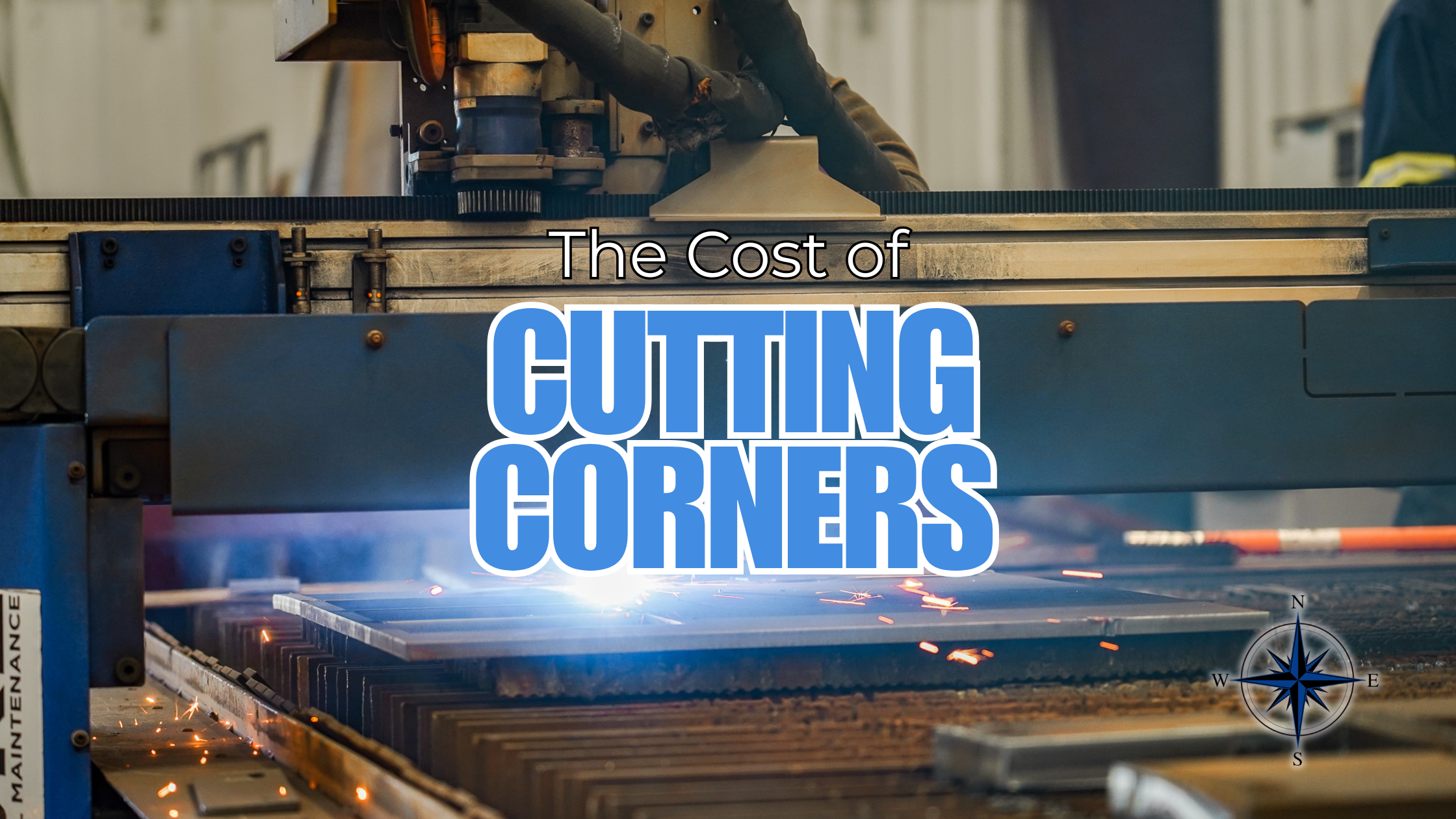
Because there's a big difference between working efficiently and cutting corners.
At Southern Response Services, we understand the demands placed on industrial employers and the skilled men and women who keep their operations moving.
We also understand that quality, safety, and accountability are essential to the success of any project.
And sometimes, the most important decision on a jobsite is choosing to do something correctly, even when a shortcut seems easier.
Every successful industrial operation looks for ways to improve efficiency.
Better planning.
Improved communication.
More effective processes.
Proper equipment.
Experienced workers.
These things can help companies complete projects faster without sacrificing quality.
But cutting corners is something entirely different.
A shortcut becomes a problem when someone skips a required step, ignores a procedure, uses an improper method, or compromises safety or quality to save time.
It might seem insignificant in the moment.
Maybe it's an inspection that gets skipped.
A measurement that isn't double-checked.
A procedure that gets rushed.
A piece of equipment that isn't properly examined before use.
The worker may save a few minutes.
But if something goes wrong, those few minutes can become hours, days, or even weeks of additional work.
Efficiency eliminates unnecessary steps. Cutting corners eliminates necessary ones.
Understanding that difference matters.
Industrial work is demanding.
Projects have deadlines for a reason.
A manufacturing facility may need equipment back in service.
A contractor may have another crew waiting to begin.
A shipyard may be working toward a vessel delivery date.
An outage may have a limited window before production must resume.
That pressure is real.
But pressure can also lead to poor decisions.
When the focus becomes finishing at any cost, workers may feel tempted to rush through tasks that require careful attention.
Supervisors may feel pressure to push schedules.
Crews may hesitate to raise concerns because they don't want to slow down the job.
That's when problems can begin.
The strongest operations recognize that speed cannot come at the expense of doing the work correctly.
Because a finished job isn't truly finished if it has to be torn apart and done again.
Consider something as simple as an incorrect measurement.
On its own, it may not seem like a major issue.
But what happens when that measurement is used to fabricate a component?
Now the component doesn't fit.
The installation crew has to stop.
The piece may need to be modified or replaced.
Additional materials may be required.
Other trades may be waiting.
And suddenly, one small mistake has affected several parts of the project.
The same principle applies across nearly every industrial trade.
An improperly installed component can create maintenance problems.
A missed inspection can allow an issue to go unnoticed.
An incorrect connection can affect equipment performance.
A rushed repair can result in another breakdown.
The consequences vary depending on the work, but the lesson remains the same.
Small details matter because small mistakes don't always stay small.
When people think about quality workmanship, they often picture the finished product.
A clean weld.
A properly installed system.
A well-built structure.
A completed piece of equipment.
But quality goes much deeper than appearance.
It's about following specifications.
Using the correct materials.
Understanding procedures.
Meeting applicable standards.
Completing required inspections.
Documenting work when necessary.
And making sure the finished product performs as intended.
Something can look good and still be wrong.
That's why qualified workers understand that quality isn't simply about what people can see.
It's about what they can trust.
There are certain things that should never be sacrificed for the sake of a schedule.
Safety is at the top of that list.
Industrial jobsites involve serious hazards.
Heavy equipment.
Elevated work.
Electrical systems.
Confined spaces.
Hot work.
Moving machinery.
Hazardous materials.
And countless other conditions that require proper training, planning, and attention.
Skipping a required safety procedure to save a few minutes can create consequences far more serious than a delayed project.
No deadline is worth someone getting hurt.
No production target is worth an employee not making it home.
And no amount of money saved can justify knowingly putting people in danger.
Strong safety cultures are built when workers and supervisors understand that doing the job correctly includes doing it safely.
Every time.
When a task has to be completed twice, the additional expense isn't limited to the labor required to fix it.
There may be wasted materials.
Additional equipment costs.
Inspection delays.
Lost productivity.
Schedule disruptions.
Extra supervision.
And other crews waiting for the work to be completed.
In some cases, a mistake can even affect the customer's operations.
That's why preventing rework is such an important part of industrial project management.
The best way to reduce those expenses isn't always to push people to work faster.
Sometimes it's making sure they have the time, information, equipment, and qualifications necessary to do the job correctly the first time.
A few extra minutes spent verifying something today may prevent hours of unnecessary work tomorrow.
Quality isn't only the responsibility of inspectors, supervisors, or project managers.
It starts with the person performing the work.
Every skilled worker has a responsibility to understand the task, follow applicable procedures, and communicate when something isn't right.
That means asking questions when instructions are unclear.
Checking your work.
Using the proper tools.
Reporting problems.
And taking responsibility when mistakes happen.
Nobody is perfect.
Even experienced professionals make mistakes.
But there's a difference between making an honest mistake and knowingly allowing a problem to continue.
Accountability means recognizing the issue and taking the appropriate steps to address it.
It's not always comfortable.
But it's necessary.
Leadership plays a major role in the quality of work performed on a jobsite.
Supervisors establish expectations.
They communicate priorities.
They coordinate crews.
They help ensure workers have the resources needed to complete their responsibilities.
And perhaps most importantly, they influence the culture of the jobsite.
If a supervisor consistently rewards speed while overlooking poor workmanship, employees may begin to believe that quality is secondary.
If workers feel pressured to hide mistakes, small problems can become larger ones.
But when leadership emphasizes doing things correctly, encourages communication, and takes concerns seriously, the entire crew benefits.
Strong supervisors don't simply ask whether the job is finished.
They ask whether it's finished correctly.
Even the most experienced tradesperson can struggle when they don't have the equipment or information necessary to complete a task properly.
Imagine asking a crew to meet a deadline without providing the correct materials.
Or expecting an employee to perform specialized work without the required training.
Or assigning a task without clear specifications.
Those situations can create unnecessary challenges.
Quality workmanship requires more than personal effort.
It requires preparation.
Employers and project leaders must help ensure that workers have appropriate tools, materials, instructions, training, and support.
When those pieces are in place, employees are better positioned to work efficiently and produce quality results.
Sometimes the difference between a successful task and an expensive mistake comes down to one conversation.
A worker notices something doesn't match the drawing.
A pipefitter identifies a potential fit-up issue.
An operator sees a problem with the equipment.
A mechanic recognizes that a component may need additional attention.
An electrician discovers something unexpected during troubleshooting.
In each situation, speaking up early can prevent larger problems.
But that only works when communication is encouraged.
Workers should feel comfortable asking questions and raising legitimate concerns.
Supervisors should take those concerns seriously.
And everyone involved should understand that identifying a problem isn't the same as creating one.
The earlier an issue is addressed, the more options a team usually has to solve it.
One of the most valuable things experienced industrial workers bring to a project is the ability to recognize when something doesn't look right.
They've encountered challenges before.
They've seen what happens when certain steps are skipped.
They understand how different systems interact.
They know that a seemingly small issue can sometimes indicate a much larger problem.
That knowledge comes from years of hands-on experience.
But experience should never replace proper procedures, inspections, or training.
Instead, it should strengthen them.
The best skilled professionals combine practical experience with a commitment to following the correct process.
They understand that knowing how to do something also means knowing why it needs to be done that way.
Quality shouldn't depend on whether a supervisor is watching.
It should be part of the culture.
A strong quality-focused workforce understands that every task matters.
Workers take pride in their craftsmanship.
Supervisors communicate clear expectations.
Employees look out for one another.
Mistakes are addressed instead of ignored.
Safety procedures are respected.
And everyone understands how their individual responsibilities contribute to the overall success of the project.
That kind of culture doesn't develop overnight.
It's built through consistent expectations and everyday decisions.
It grows when people choose to do the right thing, even when taking a shortcut would be easier.
Doing the job correctly isn't just about avoiding immediate problems.
It's also about building long-term trust.
Industrial employers depend on contractors who can deliver reliable results.
Contractors depend on skilled workers who take their responsibilities seriously.
Customers depend on equipment, systems, and structures that perform as intended.
When quality becomes a consistent priority, it strengthens those relationships.
It builds confidence.
It reduces avoidable disruptions.
And it helps establish a reputation for dependable work.
A project may be remembered for how quickly it was completed.
But the quality of that work can determine how it performs long after the crew has left.
Having the right people on a project is an important part of maintaining quality.
Different industrial tasks require different levels of training, experience, and technical ability.
A position may require specialized certifications.
Certain equipment may require specific qualifications.
Some projects involve complex procedures that demand experienced professionals.
That's why understanding the requirements of a position matters before bringing someone onto a jobsite.
At Southern Response Services, we work to connect industrial employers with qualified workers whose skills and experience align with their needs.
We understand that staffing decisions can affect productivity, safety, quality, and overall project performance.
And we believe those decisions deserve careful attention.
Because filling a position is only part of the equation.
Finding the right person for the work is what matters.
Industrial work will always involve pressure.
There will always be deadlines.
Unexpected challenges.
Changing schedules.
Demanding customers.
And moments when everyone wishes there were more hours in the day.
But none of those challenges change the importance of quality workmanship.
The goal should never be to finish a task as quickly as possible regardless of the consequences.
The goal should be to complete it safely, correctly, and efficiently.
That requires preparation.
Experience.
Communication.
Accountability.
And pride in the work being performed.
At Southern Response Services, we're proud to support the hardworking men and women who understand what it means to do a job right.
The welders.
Pipefitters.
Electricians.
Millwrights.
Equipment operators.
Mechanics.
Fabricators.
And countless other skilled professionals who help keep America's industries moving.
Because at the end of the day, the true measure of a job isn't simply how fast it was completed.
It's whether it was done right.
Southern Response Services
Connecting qualified people with opportunities. Supporting quality workmanship. Keeping industry