83%
of hires fail due to rushed or passive recruiting.
Top rated specialist

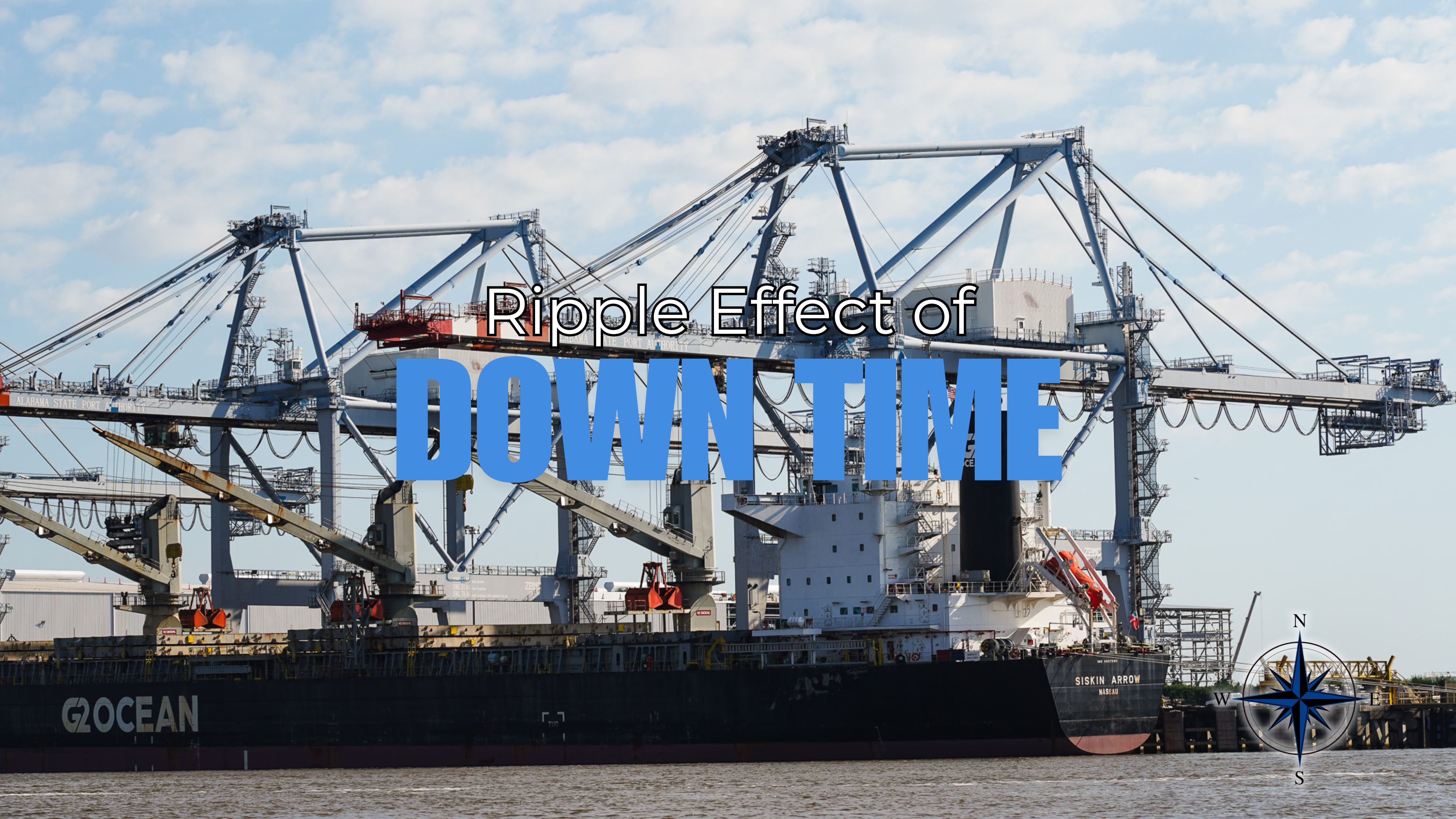
In industrial work, an hour is rarely just an hour.
When a piece of equipment goes down, a critical position isn't covered, materials don't arrive, or one phase of a project falls behind, the effects can reach much further than the immediate problem.
Production slows.
Other trades are forced to wait.
Schedules change.
Overtime increases.
Deadlines get tighter.
Customers can be affected.
And suddenly, one problem has become everyone's problem.
That's the reality of downtime.
For the men and women working inside America's plants, shipyards, mills, manufacturing facilities, construction sites, and other industrial operations, keeping things moving isn't just about productivity.
It's about understanding how connected every part of an operation really is.
At Southern Response Services, we see firsthand how important people are to that equation.
Because when industry moves, there are people behind it.
And when something stops, the ripple effect can move quickly.
At its simplest, downtime is any period when equipment, production, or an operation isn't functioning as intended.
Sometimes downtime is planned.
A facility may intentionally shut down a piece of equipment or an entire process for inspection, maintenance, upgrades, cleaning, or repairs.
That's why industrial outages and turnarounds are so important. Planned downtime gives companies an opportunity to address problems before they become larger ones.
Unplanned downtime is different.
A machine fails unexpectedly.
A critical component breaks.
An electrical issue occurs.
Materials aren't available.
There aren't enough qualified people available to complete the work.
Something happens that wasn't part of the plan.
Now the clock is running.
And in an industrial environment, that clock can get expensive quickly.
Imagine a critical piece of equipment goes down in a manufacturing facility.
At first, the problem may seem isolated.
Maintenance needs to repair the equipment.
But what happens if another department depends on that equipment?
Now their production slows.
What if the next stage of the process depends on the material they produce?
That slows too.
What happens when trucks are scheduled to pick up finished products that aren't ready?
Now transportation is affected.
What if a customer is waiting on that shipment to keep their own operation moving?
The problem has now traveled outside the original facility.
That's the ripple effect.
Industrial operations are made up of interconnected systems, and a disruption in one area can quickly create challenges somewhere else.
When people hear "downtime," they often immediately think about broken machinery.
Equipment failure is certainly one cause.
But it's far from the only one.
Downtime can also happen because of:
Sometimes the equipment is ready.
The material is ready.
The project is ready.
But the right people aren't available.
That's why workforce planning is such an important part of industrial planning.
A company can have millions of dollars worth of equipment sitting on a site, but eventually someone has to operate it, maintain it, repair it, inspect it, or support the work happening around it.
People aren't separate from industrial operations.
They're part of them.
A welder doesn't simply fill a position on an organizational chart.
That welder may be responsible for completing work another crew needs before they can begin.
An equipment operator may be supporting multiple trades throughout a project.
An electrician may be troubleshooting an issue preventing equipment from returning to service.
A mechanic may be repairing the machine holding up production.
A supervisor may be coordinating dozens of moving pieces to keep the schedule intact.
When one of those positions is missing, the impact can reach beyond that individual role.
This is why having qualified people in the right place at the right time matters.
It's not simply about filling an opening.
It's about keeping the operation moving.
Not all downtime is bad.
In fact, sometimes stopping production is exactly what needs to happen.
Facilities routinely schedule outages and turnarounds to perform work that can't safely or effectively happen while normal operations continue.
During these periods, companies may inspect equipment, replace worn components, perform preventive maintenance, complete upgrades, repair systems, and prepare the facility for another production cycle.
The goal is simple:
Stop intentionally now so you don't have to stop unexpectedly later.
But planned downtime creates its own challenge.
The window is limited.
A facility may have weeks or months to prepare for an outage but only days to complete the actual work.
That puts enormous importance on planning, communication, materials, supervision, safety, and manpower.
When the clock starts, everyone needs to be ready.
Large industrial projects often involve multiple trades working around one another.
One crew finishes so another can begin.
That makes coordination incredibly important.
If demolition takes longer than expected, installation may start late.
If fabrication isn't completed, another crew may be waiting.
If an inspection doesn't happen on schedule, work may not be able to continue.
If equipment isn't available, multiple crews can be affected.
Nobody works entirely inside a bubble.
Understanding how your task affects the people coming behind you is one of the most valuable mindsets an industrial worker can develop.
You're not just completing your piece of the project.
You're helping keep the entire schedule moving.
Sometimes preventing downtime doesn't require another piece of equipment or a complicated new system.
It requires someone communicating.
A worker notices a problem developing and reports it early.
A supervisor realizes materials are running low and addresses it before the crew runs out.
One department tells another about a schedule change before workers arrive.
A maintenance technician identifies an unusual sound before the equipment fails completely.
Small pieces of information can make a major difference when they're communicated to the right people at the right time.
The earlier a potential problem is identified, the more options a team usually has to address it.
Waiting often removes those options.
Repairing a major breakdown is noticeable.
Preventing one isn't.
That's part of what makes preventive maintenance so easy to underestimate.
When maintenance teams inspect equipment, replace worn components, lubricate machinery, monitor performance, and address smaller issues, there may not be a dramatic result everyone sees.
The equipment simply keeps running.
And that's the point.
Some of the most valuable work in industry is the work that prevents a problem anyone else ever has to know about.
The best breakdown is often the one that never happens.
When a major project, outage, or turnaround is approaching, preparation can determine how smoothly the work goes.
Do we have the people?
Do we have the equipment?
Do we have the materials?
Are responsibilities clear?
Are certifications current?
Does everyone understand the schedule?
What happens if something changes?
What are the potential bottlenecks?
Strong planning doesn't guarantee there won't be surprises.
Industrial work will always have unexpected challenges.
But preparation gives teams more ability to respond when those challenges happen.
The goal isn't to create a plan that can never change.
It's to create a team capable of adapting when it does.
It's easy to look at an industrial facility and see equipment.
Cranes.
Machines.
Piping.
Electrical systems.
Production lines.
Heavy equipment.
But behind all of it are people.
People designed it.
People built it.
People operate it.
People inspect it.
People maintain it.
People repair it.
People keep it running.
That's something worth remembering.
Technology continues to change industrial work, but skilled people remain one of the most important parts of keeping operations moving.
At Southern Response Services, we understand that our role goes beyond matching a name with an open position.
The people we place may become part of a much larger operation.
Their work may help a project stay on schedule.
Their experience may help a crew solve a problem.
Their skill may help equipment return to service.
Their dependability may help an employer meet a deadline.
That's why having the right people matters.
Because in industry, delays don't always stay small.
One hour can affect the next shift.
One shift can affect the schedule.
The schedule can affect production.
Production can affect the customer.
And it all connects.
Every hour matters. Every role matters. Every person matters.
At Southern Response Services, we're proud to connect skilled people with the companies and projects that keep America moving.
Southern Response Services
The right people. The right opportunity. Keeping industry moving.